Tutorials
Graffiti Bubble Letters Step by Step: Clean Beginner Flow
Learn graffiti bubble letters with a repeatable 3-pass method: skeleton, weight, and style. Includes worked and failed examples plus a fast practice drill.
Published Mar 6, 2026 · Updated Mar 6, 2026 · 9 min read · By SprayShift Editorial

Quick Answer
To draw graffiti bubble letters, use three passes: first sketch simple rounded skeletons, then add even stroke thickness, then add one style layer like shadow or inline. This order keeps letters readable and fixes spacing before effects hide mistakes. Practice on one short word per run so you can compare versions quickly.
Who This Is For
Beginners who want clean, readable bubble letters and intermediate users who need a repeatable workflow for faster improvements.
Table of Contents
What makes bubble graffiti letters work
Strong bubble letters are simple first and stylish second. The base shape should read instantly before you add depth, highlights, or effects.
Most weak outputs fail because writers jump to effects too early. Keep your first pass plain and judge readability at a small mobile size.
- Round silhouette with clear outer contour
- Even stroke thickness across the full word
- Counters and inner gaps that stay open
- Consistent baseline so letters do not drift
Step-by-step method: skeleton, weight, style
Pass one defines structure: simple uppercase bubbles with clean spacing. Pass two adds thickness so every major stroke feels consistent. Pass three adds one style layer only.
This sequence removes guesswork and keeps changes measurable. When each pass has one job, you can fix problems without restarting.
- Skeleton pass: map plain rounded letter shapes with even height.
- Weight pass: add one outer contour and keep thickness consistent.
- Style pass: add one detail only (shadow, inline, or shine).
- Review pass: shrink view and confirm readability at small size.
| Pass | Goal | Success signal |
|---|---|---|
| Skeleton | Readable letter structure | Word is readable in one glance |
| Weight | Consistent thickness | No random thin or heavy sections |
| Style | One controlled detail | Detail supports, not hides, structure |

Worked example: the NEXUS piece stays readable because the style layer is restrained and the base shapes remain clear.
Next Step
Try the 3-Pass Bubble Workflow
Run one short word with Bubble style, then change only one variable per generation attempt.
Spacing rules for bubble letters that feel balanced
Even strong letters look amateur when spacing is uneven. Start with one default gap and adjust only high-collision pairs.
Test spacing with short words like FLOW, BOUNCE, and UNITY before long names. Short words expose rhythm issues faster.
- Keep the baseline stable across all letters
- Use one default gap before custom pair tweaks
- Avoid touching or merging letters in beginner passes
- Check rhythm by reading the word left to right at 50% size
Common failure: over-styling too early
This fail case keeps the bubble base but overloads it with glow halos, extra cuts, and heavy drips before structure is stable. The result feels loud but reads worse, especially on mobile.
When this happens, remove two visual effects immediately and return to plain rounded forms. Then re-add one detail at a time.
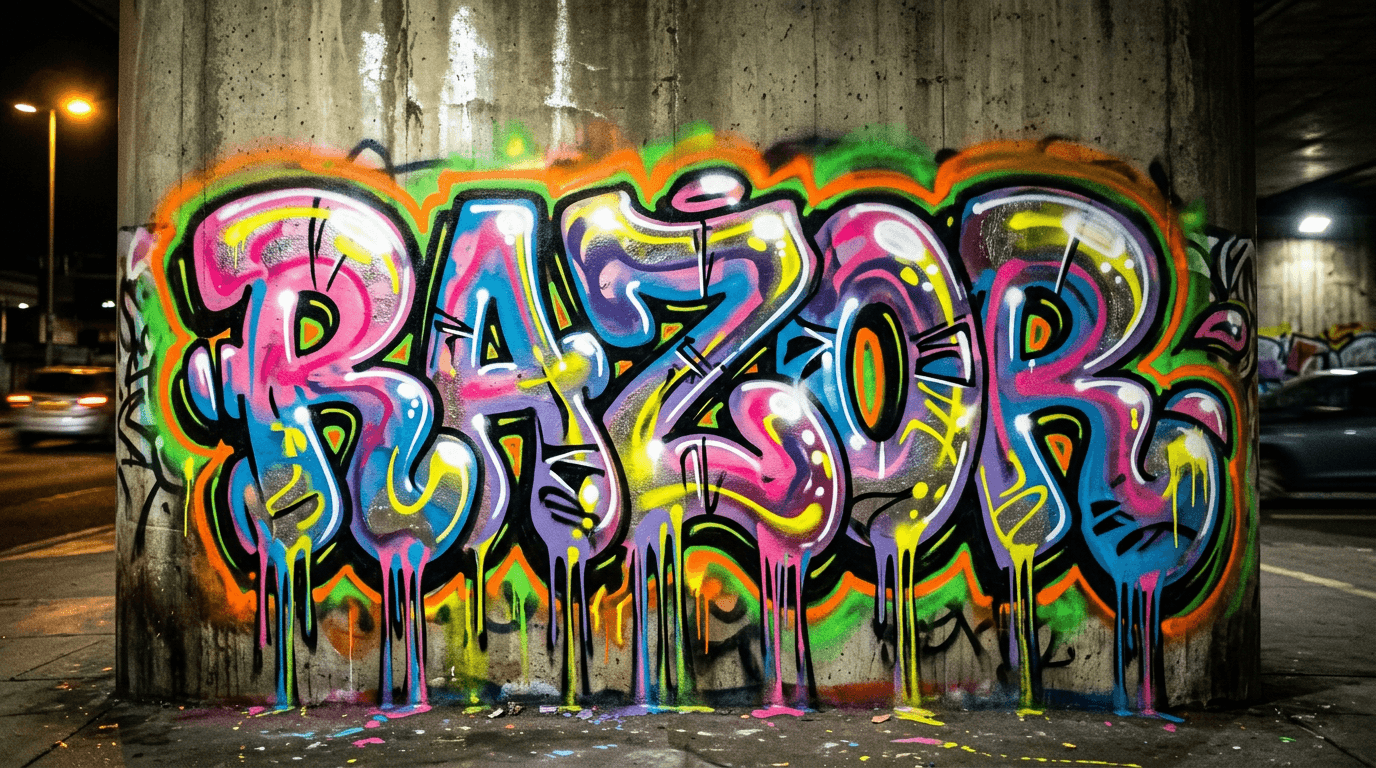
Failed example: too many effects and drips bury the bubble letter structure.
When bubble letters are the wrong style
Bubble style is ideal for readability, beginner drills, and friendly brand visuals. It is weaker for aggressive battle pieces or high-complexity letter distortion.
If your goal is raw edge and heavy motion, move to tag or wildstyle after your bubble fundamentals are stable.
- Strong fit: beginner practice, logos, social headers, merch concepts
- Weak fit: highly aggressive battle-style pieces
- Weak fit: extreme distortion where readability is not a goal
What to do next: 10-minute bubble drill
Pick one 5-letter word and run the full 3-pass method now. Save your cleanest version as your baseline and note one fix for the next run.
Repeat this for three words this week and you will improve spacing and control faster than random long sessions.
- Generate or sketch one skeleton pass.
- Add weight and verify consistency.
- Add one style layer only.
- Compare with your previous run and keep the better version.
FAQ
What is the best first word for bubble letter practice?
How many style effects should beginners add?
Why do my bubble letters look crowded?
Should I practice bubble letters before wildstyle?
Related Reads and Next Actions
Next Step
Ready to Apply This in a Real Generation?
Run this drill with three different words this week. If you hit usage limits while practicing daily, compare plans before your next lettering sprint.