Tutorials
Graffiti Letters for Beginners: First 7-Day Practice Plan
A beginner practice plan for building readable graffiti letters in 7 days before moving into advanced style complexity.
Published Feb 28, 2026 · Updated Mar 10, 2026 · 10 min read · By SprayShift Editorial

Quick Answer
Start with a 7-day beginner structure: skeleton first, consistent thickness second, style details last. Keep this page for week-one drills, then use /graffiti-letters for broader structure and progression.
Who This Is For
New writers and designers who want to build control and readability before complex style effects.
Table of Contents
Rule #1: readability beats complexity in week one
The fastest way to improve graffiti letters is to keep every letter readable at first glance, then layer personality on top.
Complex add-ons only work when the core structure is solid. If your base shape is weak, arrows and effects will hide errors instead of fixing them.
3-pass beginner method
Pass one is skeleton: draw or prompt simple uppercase structure. Pass two is weight: thicken strokes consistently. Pass three is style: add minor cuts, shadows, or highlights.
This method keeps your progress measurable. You always know whether an issue came from structure, weight, or style detail.
- Skeleton pass: straight, legible letter shapes.
- Weight pass: equal thickness across major strokes.
- Style pass: one enhancement only (shadow, inline, or small extension).
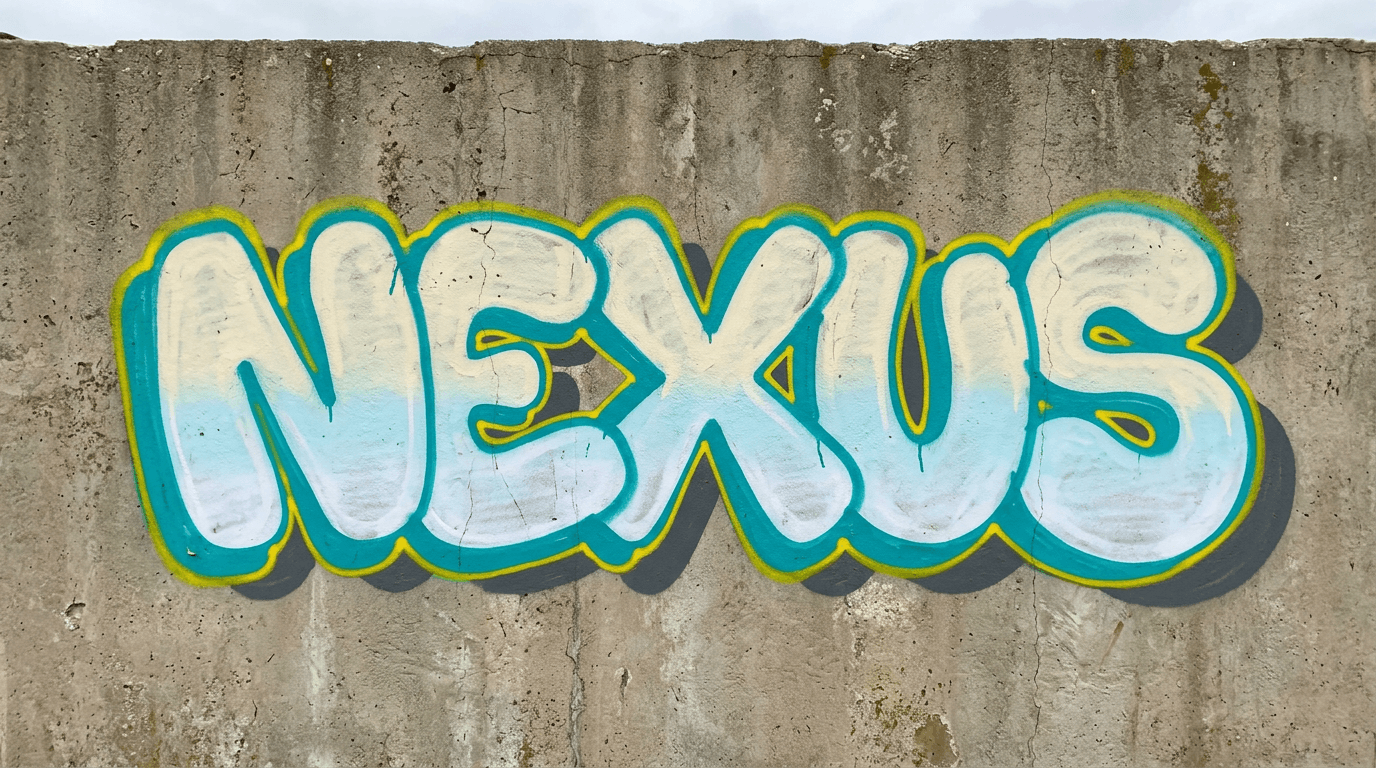
Worked reference: this pass keeps the word readable while adding one controlled shadow for depth.
Next Step
Generate Beginner-Friendly Letter Sets
Use Bubble style to test clean rounded forms before advanced distortion.
Pick the right practice words
Choose 4-8 letter words with mixed shapes. Words like FLOW, RUSH, and STYLE give you useful curve and angle variety without becoming too long.
Avoid very long words at first. Short words let you compare versions quickly and improve spacing decisions faster.
- Use 4-8 letters for practice sets
- Mix straight and curved letters
- Keep one margin between letters
- Review silhouette before adding details
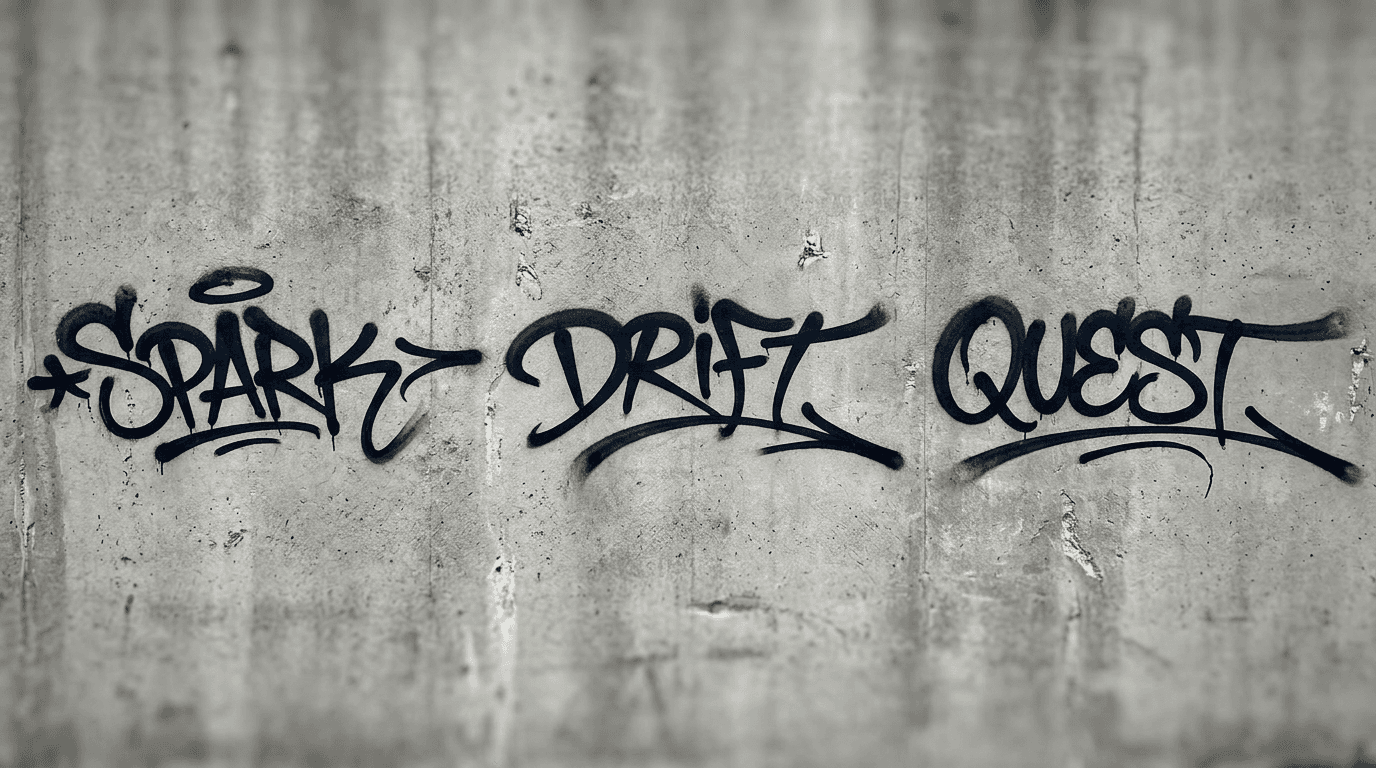
Third example image: short-word practice set using multiple 4-8 letter targets to compare spacing and rhythm quickly.
7-day beginner drill plan
Run short daily drills instead of long random sessions. The goal is consistency, not volume. Keep each day focused on one skill so you can see why results improve.
If you miss a day, do not restart. Continue from the next drill and repeat the weakest day at the end of the week.
| Day | Focus | Output goal |
|---|---|---|
| Day 1 | Skeletons only | 3 clean uppercase words |
| Day 2 | Stroke thickness | 2 words with even weight |
| Day 3 | Spacing | 2 words with consistent gaps |
| Day 4 | One style detail | 2 words with one controlled effect |
| Day 5 | Contrast pass | 2 readable high-contrast outputs |
| Day 6 | Error correction | fix your worst Day 2-5 output |
| Day 7 | Review and lock baseline | pick one baseline prompt to keep |
Beginner mistakes that slow progress
The most common trap is over-styling too early. Too many spikes, arrows, or gradients make it hard to diagnose letter problems.
Another issue is uneven spacing. Even strong letters look weak when gaps are inconsistent.
| Problem | Likely cause | Fix |
|---|---|---|
| Letters look crowded | Spacing ignored in sketch pass | Add a spacing review before styling |
| Word feels flat | No thickness variation | Add consistent outline and one shadow direction |
| Hard to read | Too many decorative add-ons | Remove two effects and keep one |
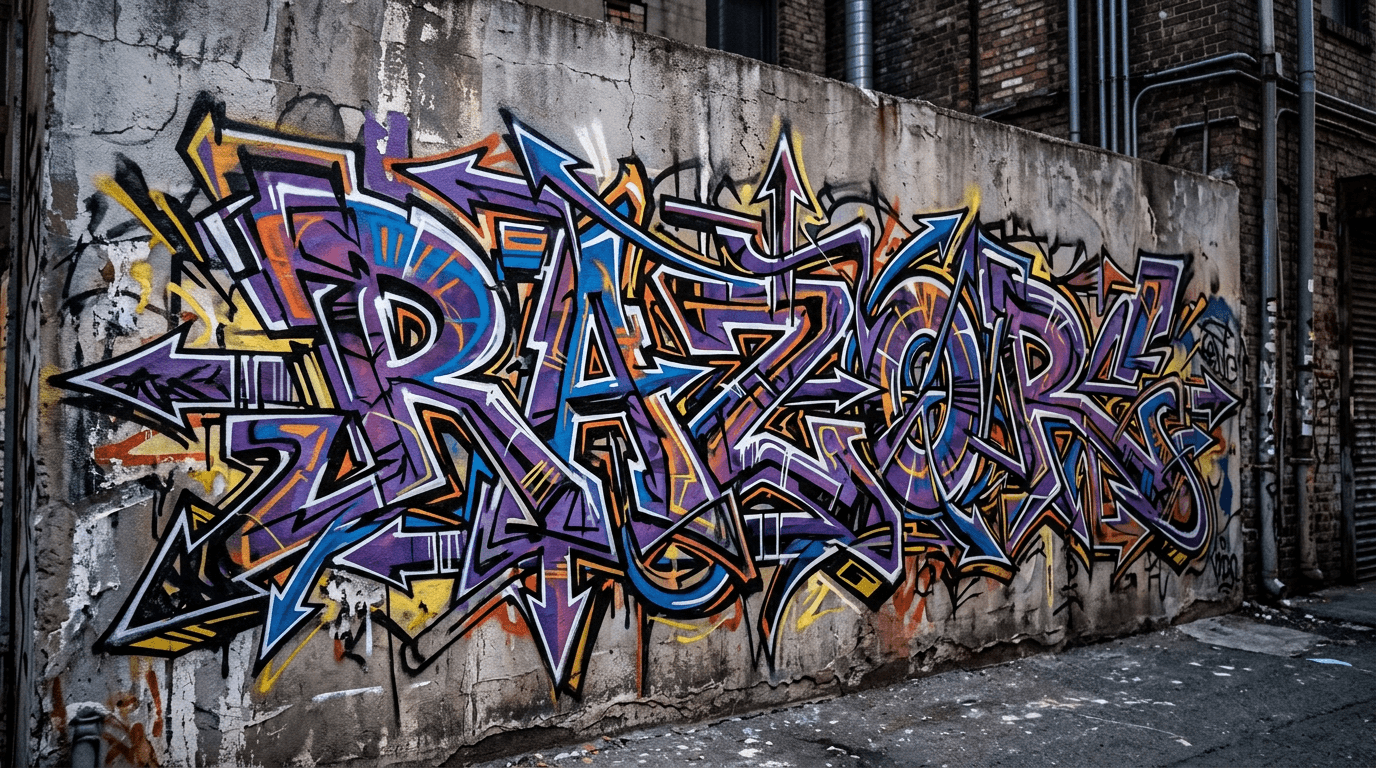
Failure reference: pushing advanced complexity too early can bury letter structure under arrows and overlaps; the issue is timing, not wildstyle itself.
Readiness check before advanced styles
Move to heavier bubble or wildstyle experiments only after your baseline outputs stay readable across multiple words. Style upgrades work better when spacing and rhythm are already stable.
Use this checklist at the end of week one. If two or more boxes fail, repeat the 7-day cycle once before increasing complexity.
- Your letters are readable at thumbnail size
- Stroke thickness stays consistent across the word
- Spacing is stable across at least three test words
- You can improve quality by changing one variable at a time
FAQ
What style should beginners start with?
How often should I practice graffiti letters?
Do I need advanced wildstyle skills first?
Related Reads and Next Actions
Next Step
Ready to Apply This in a Real Generation?
After this 7-day cadence feels stable, use /graffiti-letters for broader navigation, then compare plans so practice is not interrupted by monthly limits.