Tutorials
How to Draw Graffiti Letters: A 4-Step Method That Stays Readable
Learn how to draw graffiti letters step by step with an easy 4-step method for structure, spacing, and style before you add complexity.
Published Mar 16, 2026 · Updated Mar 16, 2026 · 13 min read · By SprayShift Editorial
Quick Answer
To draw graffiti letters, start with a plain skeleton, build the bars evenly, fix the spacing across the whole word, and save style details for the end. Most bad pieces do not die in the color stage. They die earlier, when the base shape gets shaky, the counters choke up, or the gaps between letters go wrong before the style layer even starts.
Who This Is For
Beginners and improving writers who want a cleaner process, easier starting letters, and a way to avoid jumping straight from basic letters into a messy overcooked piece.
Table of Contents
- Start with a letter skeleton before you touch style
- Use this 4-step drawing method for every word
- See one word move through all four passes
- What usually goes wrong with A, R, K, and O
- Worked example: build one word in clean passes
- Failure example: premature complexity, not a bad style
- A 20-minute practice loop that actually improves letter control
- Know when to stop refining and move to a new word
Start with a letter skeleton before you touch style
Most weak graffiti letters fail before color or effects even matter. The usual mistake is outlining too early instead of laying down a simple skeleton that shows height, width, slant, and spacing.
A skeleton gives you something honest to judge. If the word already reads clean as bare lines, you have a real base. If it already looks cramped or wobbly there, style will not save it later.
If you want the easiest place to start, pick letters with simple bar logic first. H, I, O, C, and E will usually teach you more, faster, than jumping straight into R, K, or wild diagonals.
Use this 4-step drawing method for every word
Keep the process simple: skeleton, bars, spacing check, then style. That order stops you from decorating mistakes that should have been handled in the structure pass.
Treat each pass like a checkpoint. If the middle of the word is pinching, the baseline is drifting, or the counters are closing too early, highlights and arrows will only hide the damage for a minute.
- Skeleton pass: draw the center line or plain block structure for each letter before outlining anything.
- Bar pass: wrap consistent thickness around each stroke so the word feels built, not inflated at random.
- Spacing pass: compare the gaps between letters and adjust by shape, not by equal ruler measurements.
- Style pass: add one or two details only, such as an inline, a notch, or a single shadow direction.
Next Step
Study One Readable Word
Use one short word and compare structure, spacing, and weight before you start adding more style.
See one word move through all four passes
This is the part most tutorials skip. The same word should look plain at first, then tighter with each pass. If every stage already looks flashy, you are styling too early.
Look at what actually changes from panel to panel: first the center structure, then the bar weight, then the spacing correction, then the clean finish. That is a real drawing sequence, not four random versions pretending to be a process.
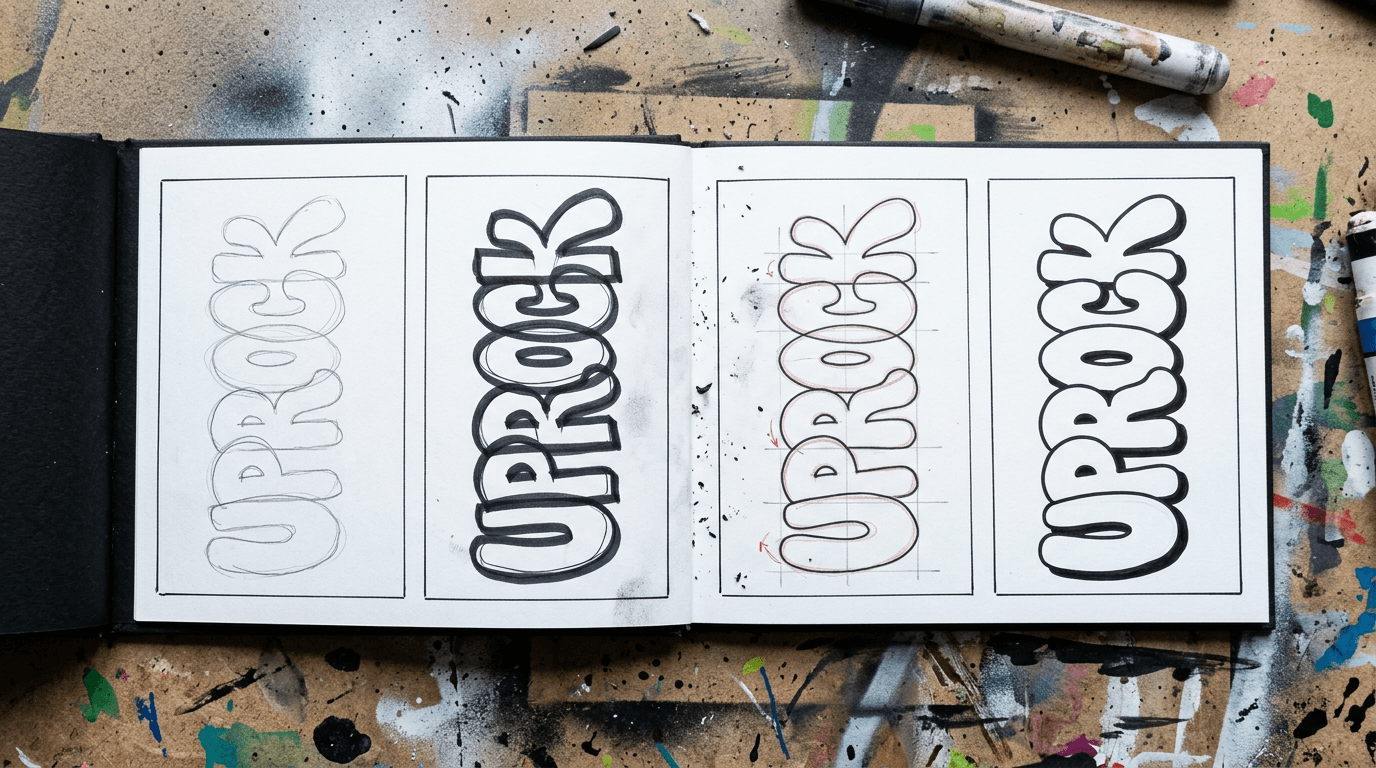
Four-pass blackbook progression: skeleton first, bar construction second, spacing correction third, clean finish last.
What usually goes wrong with A, R, K, and O
People get jammed up on the same letters again and again, and it is not because those letters are cursed. Each one exposes a different weakness in the build.
If one of these letters keeps ruining the word, isolate it for ten fast repetitions before you redraw the whole piece. That is almost always faster than trying to rescue the whole word blind.
- Easy starters: H, I, O, C, E
- Medium difficulty: T, L, P, U
- Usually harder for beginners: A, R, K, Y
| Letter | What usually breaks | What to correct first |
|---|---|---|
| A | The crossbar sits too high or the left and right legs use different angles | Lock one outside angle first, then place the crossbar after the shell reads clean |
| R | It turns into a P with a random leg bolted on | Decide exactly where the bowl ends, then launch the leg from that same break point |
| K | The middle joint gets crowded and both arms fight for space | Set one center joint, then send the upper and lower diagonals out with clear separation |
| O | The outside shape works but the inner counter drifts and makes the letter feel swollen | Center the counter before you thicken the outside curve |
Worked example: build one word in clean passes
This UPROCK example works because the word still reads before you even think about the style. The left side of the U holds up, the bowls in the R and O stay open, and the final K still has enough air around it.
The shadow helps instead of grabbing attention for itself. It reads like a sprayed pass sitting behind the letters, not a fake logo effect dropped in afterward.
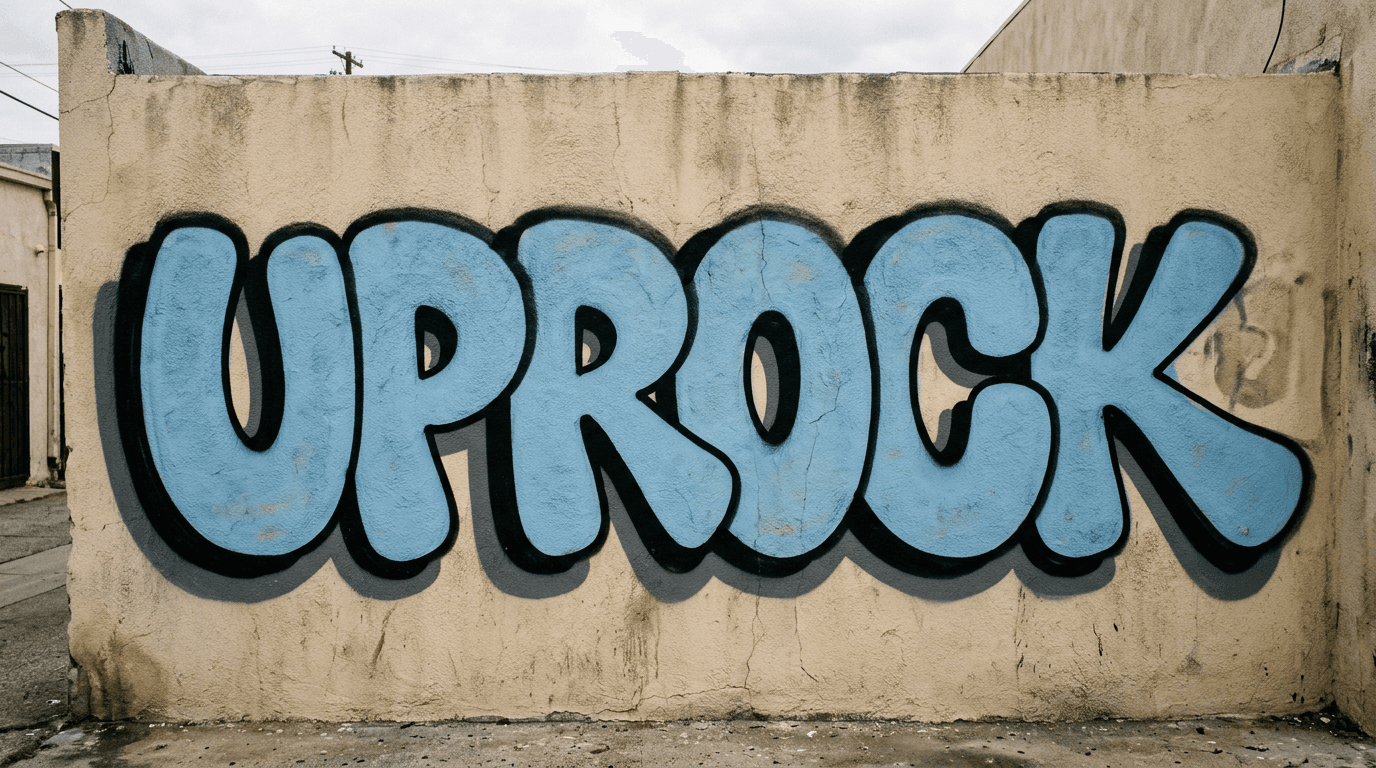
Worked reference: UPROCK keeps a clean baseline, open counters, and a sprayed shadow pass that still feels painted into the wall.
Failure example: premature complexity, not a bad style
This JAGGED piece misses for one reason: complexity showed up before control. The arrows, overlaps, and bends start shouting over the actual letters, so the baseline and counters never get a fair chance to hold the word together.
Wildstyle is not the problem here. The real problem is trying to push distortion before the word has a stable skeleton, a spacing plan, and a clean bar structure.
You can spot the damage fast: the middle letters compress, the counters tighten up, and your eye has to work too hard just to separate one letter from the next. Once a sketch starts doing that, strip it back before you add anything else.
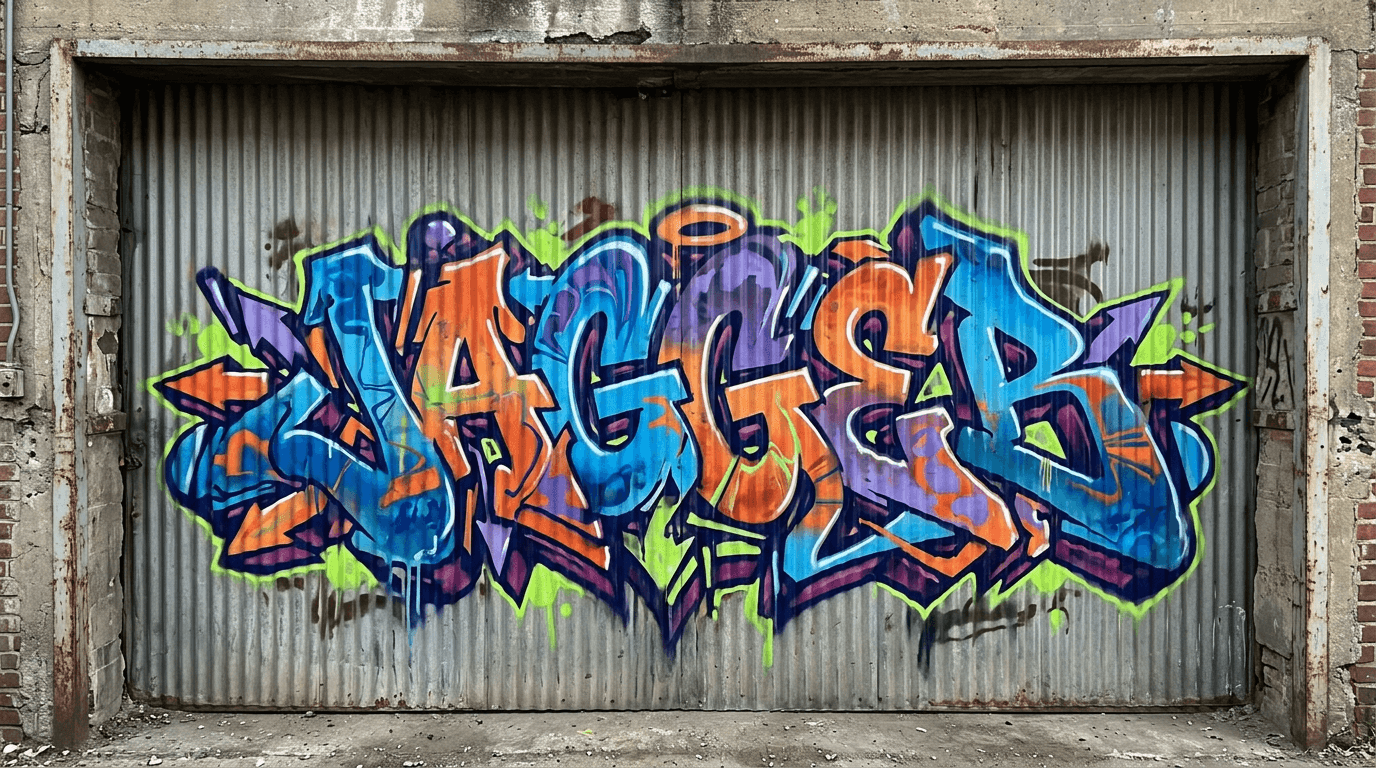
Failure reference: the energy is real, but the structure was not locked first, so arrows and compressed spacing bury the word.
A 20-minute practice loop that actually improves letter control
Long unfocused sessions usually turn into random styling. Short drills are better because you can finish the page knowing exactly what got better and what still looks off.
Use one word for the whole session. If the R kept collapsing or the gaps around the O kept drifting, the next round should go straight at that one problem.
- Keep the same word through all four mini-rounds
- Circle one weak letter before you start the next session
- Save your cleanest version so you can compare progress honestly
| Minutes | Focus | Output |
|---|---|---|
| 5 | Skeleton only | 3 quick word layouts |
| 5 | Bar consistency | 1 cleaned-up version with even thickness |
| 5 | Spacing review | 1 corrected version with balanced gaps |
| 5 | One style detail | 1 finished pass with a single effect |
Know when to stop refining and move to a new word
A lot of beginners stall because they keep polishing one average sketch instead of testing the lesson on a fresh word. Once the baseline is readable and the bars are even, move on and run the method again somewhere new.
Real progress shows up when the same fix carries from one word to the next. If your spacing only improves on one favorite word, the skill is not locked yet.
- Move on when the word reads clearly without color tricks
- Repeat the same method on a different word before adding more effects
- Escalate to wilder styles only after spacing and bar control feel automatic
FAQ
What is the first thing to draw in graffiti letters?
How do I make graffiti letters look better fast?
What are the easiest graffiti letters to start with?
How should I practice graffiti letters step by step?
Should I learn wildstyle before basic graffiti letters?
Related Reads and Next Actions
Next Step
Ready to Apply This in a Real Generation?
Take one short word through skeleton, bars, spacing, and style today. Keep the clearest version, then run the same method on a new word instead of endlessly polishing the same sketch.