Letters
Short Graffiti Words for Practice: Better 3-5 Letter Picks
Use these short graffiti words for practice when you want cleaner spacing, better rhythm, and stronger exits without hiding weak letters under effects.
Published Apr 14, 2026 · Updated Apr 14, 2026 · 12 min read · By SprayShift Editorial
Quick Answer
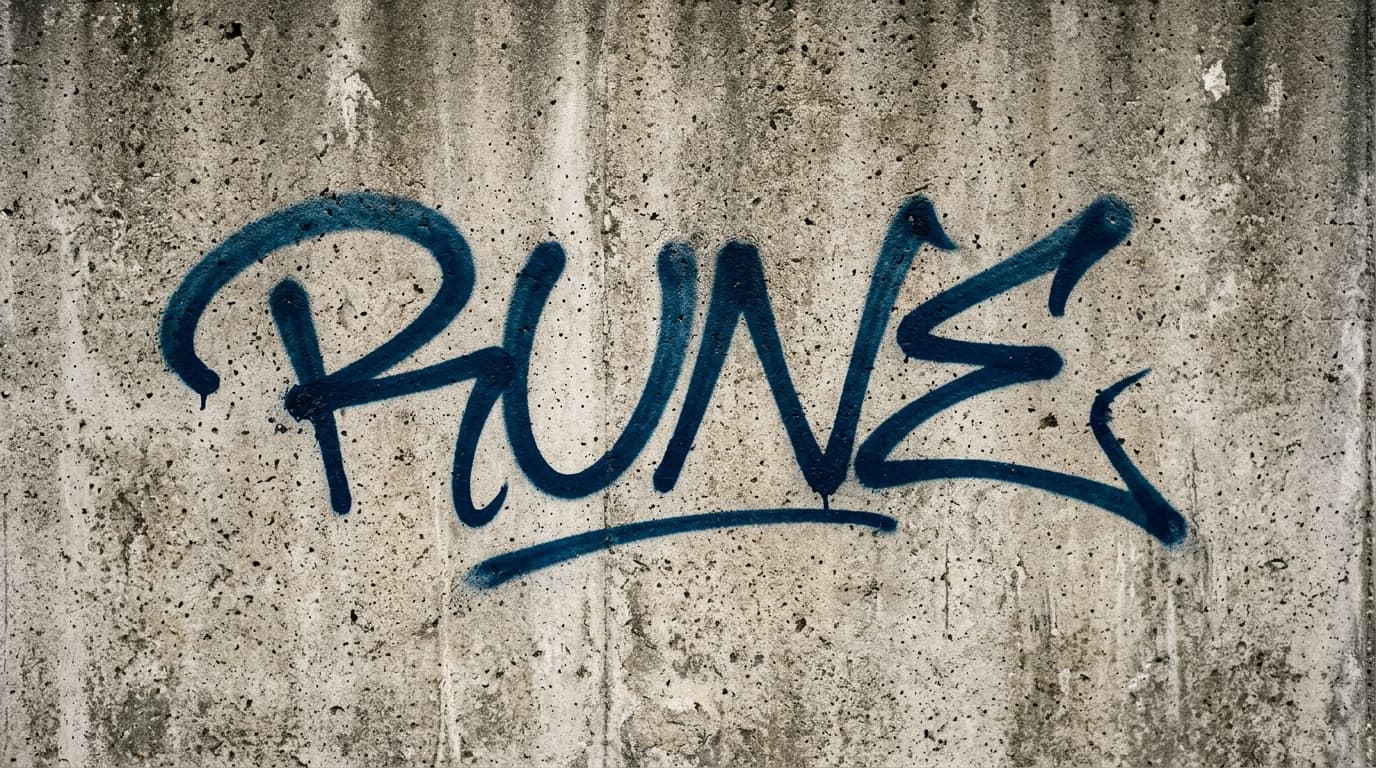
Short graffiti words are better practice because they tell on you fast. Use 3-5 letters, keep at least one open shape in the word, and stop picking names that only work once you start dressing them up. ACE, RUNE, MINT, VAST, and AERO are all good because they expose different problems early. If the word only comes alive after tails and arrows, it is probably not a good drill word yet.
Who This Is For
People who are tired of wasting pages on words that sounded hard in their head but draw like garbage once the second and third letters have to live together.
Table of Contents
- Why short words teach more than long names when your structure is still shaky
- How do you tell if a short graffiti word is actually worth repeating?
- Best 3-letter graffiti words for speed reps
- Best 4-5 letter graffiti words when you want real rhythm
- Failure example: even a good short word can turn stiff if the straights start choking each other
- Do not pick words just because they sound hard
- What I would actually drill tonight
Why short words teach more than long names when your structure is still shaky
A short word leaves you nowhere to hide. You cannot bury a weak middle under ten more letters, and you cannot pretend the exit works just because the opener had some punch.
That is why short words stay useful in real blackbook practice. They expose the join fast. If the second and third letters are fighting each other, you feel it by rep three instead of half a page later.
The word that wins on the first clean pass is not always the word that survives repetition. The keeper is the one that still holds its rhythm when your hand gets tired and the extras are gone.
- Keep most drill words between 3 and 5 letters
- Mix one open or rounded form with one straighter or sharper form
- Judge the base word before tails, arrows, fills, or 3D
- Avoid treating a flashy opener like it can rescue a dead middle
How do you tell if a short graffiti word is actually worth repeating?
Run a fast score before you style anything. A short word should give you a usable opener, a middle that still breathes, and an exit that finishes the word instead of trying to save it.
This sounds simple, but it cuts out a lot of bad reps. If the skeleton already feels cramped, styling is usually just expensive camouflage.
| Trait | What you are checking | Good drill words |
|---|---|---|
| Strong opener | Can the first letter set the lean without bullying the rest? | ACE, RUNE, VAST |
| Breathing center | Does the middle keep air instead of clotting up? | AERO, MOB, NOVA |
| Clean exit | Can the last letter finish with control instead of panic? | MINT, ORE, CRATE |
| Repeatability | Does the word still feel related on rep 10 when speed goes up? | RUE, DUSK, SABLE |
Next Step
Test One Short Word in Tag Style
Keep the word short, keep the style fixed, and change one thing at a time so you can see whether the opener, center, or exit is really getting cleaner.
Best 3-letter graffiti words for speed reps
Three-letter words are honest. They are fast enough for twenty repetitions, and they make pair problems obvious because there are only two handoffs in the whole word.
Do not assume every tiny word is beginner-safe, though. Some short words are all narrow stems and no air. Start with words that give you one open shape before you move into meaner combinations.
A word like ACE is forgiving in a good way. A word like VEX is not. The X can start acting like the whole piece if you let it. ARC can also get ugly fast if the R leg starts showing off before the A and C are even settled.
- ACE: clean A opener, open C center, simple E exit
- ARC: good tension between the A and R without feeling cramped
- ORE: rounded start, steadier finish, useful for calmer straight-letter reps
- RUE: quick RU movement with an easy last letter
- MOB: strong for bowl control in bubble and throw-up practice
- CUE: useful when you want a softer start and a quieter finish
- AWE: open and readable, but only if the W stays disciplined
- VEX: sharper and meaner, better once the X stops stealing the whole word
Best 4-5 letter graffiti words when you want real rhythm
Four- and five-letter words are the sweet spot for most practice sessions. They are long enough to expose rhythm drift, but short enough that you can still isolate the bad join without redrawing a whole saga.
This is also where writers learn that short does not always mean easy. MINT is an honest word because the straights can go stiff fast. AERO feels smoother, but it will tell on you the second the round forms stop breathing.
VAST is another one people misread. It feels aggressive, so beginners start forcing it. Then the A gets too proud, the ST close gets pinched, and the word reads like two moods stitched together. AERO lies in the opposite way: it looks smooth while the spacing is already drifting.
- RUNE: balanced opener, open middle, clean finish
- MINT: brutal honesty test for repeated straights and a controlled exit
- VAST: strong V entry with enough shape contrast to keep rhythm alive
- DUSK: compact, useful, and good for testing a tighter close
- AERO: great spacing word because the open letters can still collapse if you rush them
- NOVA: round center and repeatable finish make it a strong daily drill word
- SABLE: smoother sweep up front with a firmer close at the end
- CRATE: better once you want to pressure-test harder joins without going full hard mode
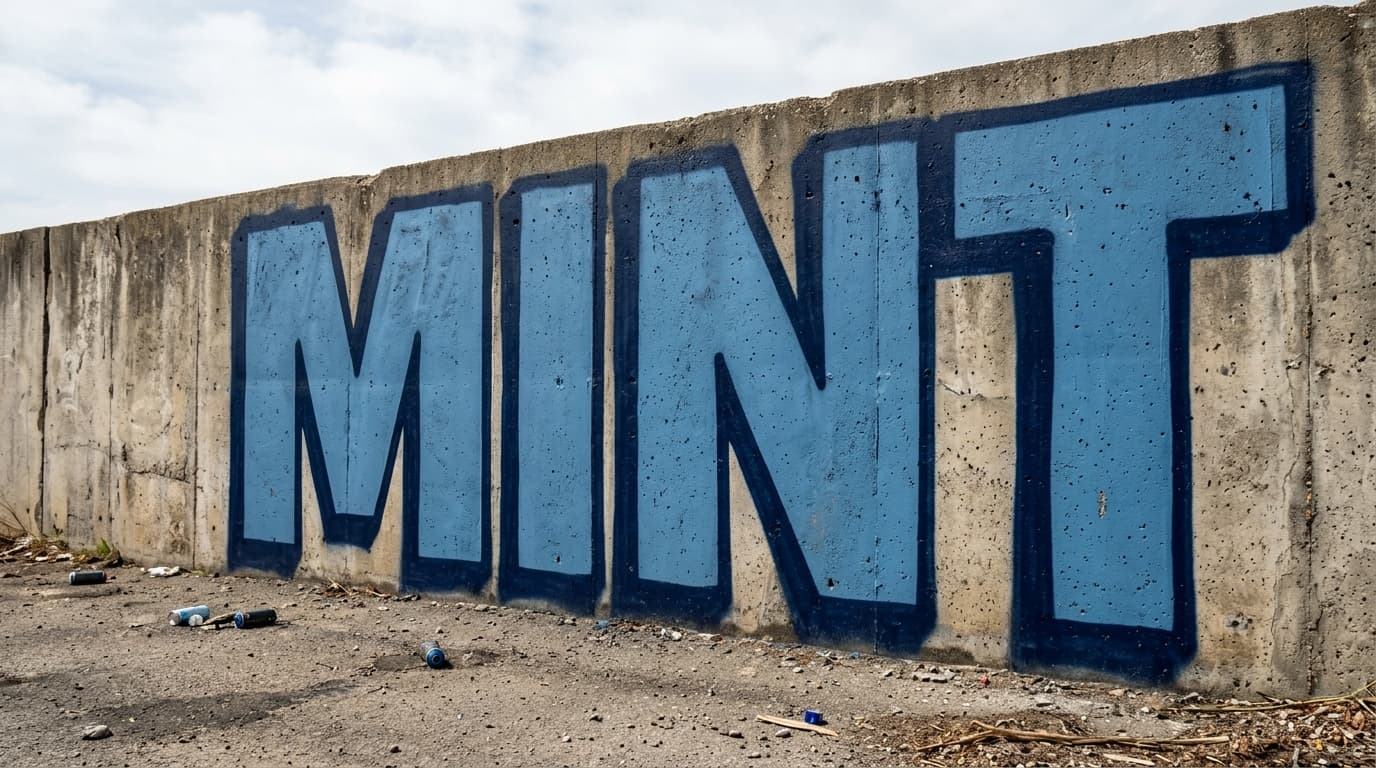
Worked example: MINT stays readable here because the straights keep one shared top line, the center still has air, and the last letter finishes the word without turning into its own event.
Failure example: even a good short word can turn stiff if the straights start choking each other
This bad MINT wall is useful because it fails with a word that should have worked. The spacing pinches, the middle straights go rigid, and the final T feels tacked on instead of earned.
That is a real practice lesson. A word can be strong on paper and still turn awkward the moment the top line drifts and the center loses air. Short words are not automatically easy. They are just more honest when they go wrong.
When a good drill word starts failing like this, do not decorate it. Reopen the middle, calm the cap height, and make the finish answer to the same rhythm as the rest of the word.
- Stop trying to save the word with a louder final T
- Reopen the I-N pinch so the center can breathe again
- Pick one top line and make every letter answer to it
- Make the exit simpler than the opener, not flashier than it
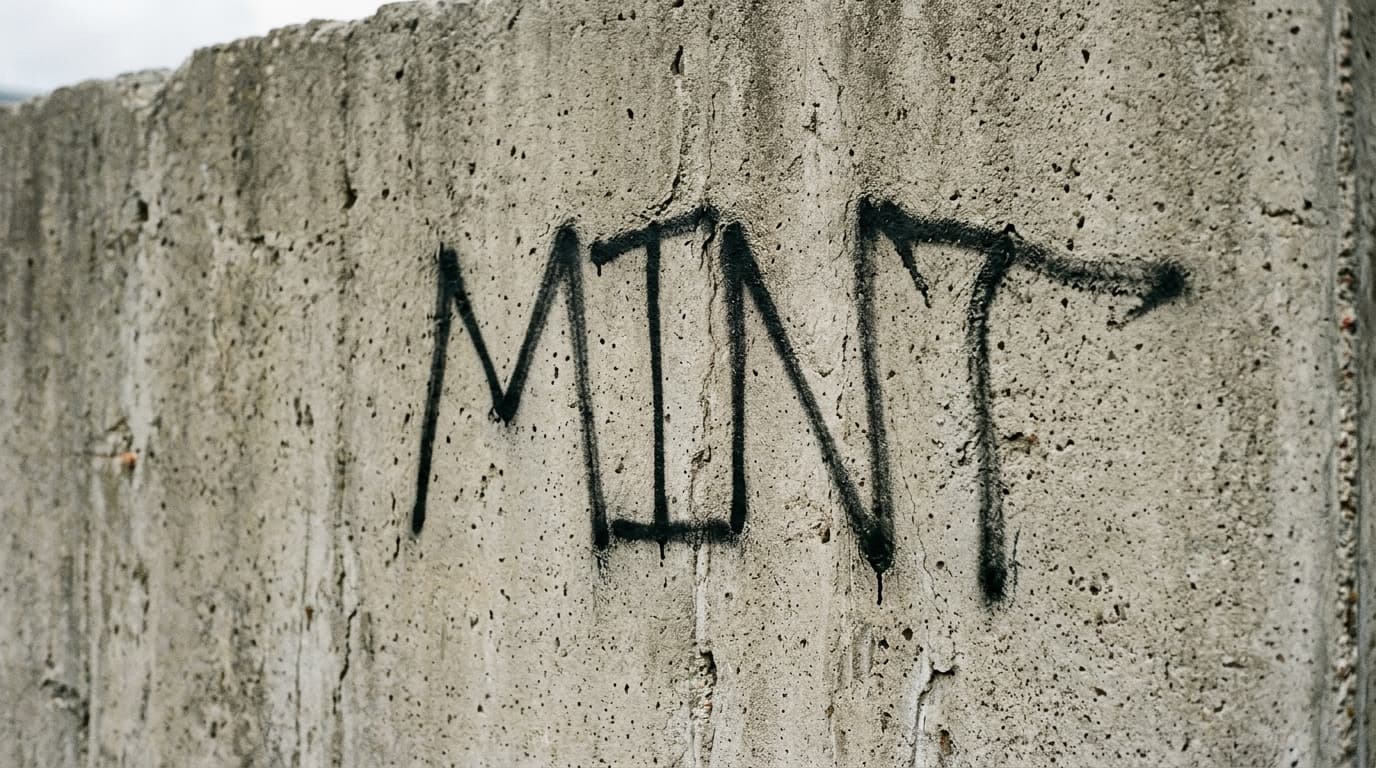
Failure example: the opener is fine, but the center locks up, the top line drifts, and the exit feels borrowed from another pass instead of belonging to the same word.
Do not pick words just because they sound hard
A lot of beginners pick words the way people pick gamer tags. Cool sound first, drawing second. That is backwards. Some words sound cold and still draw like a traffic jam.
Say the word out loud, then write it fast five times. If the spoken rhythm feels smooth but your hand keeps crashing in the same place, good. That tells you where the word is real and where it is bluffing.
Also keep blackbook logic and wall logic separate. A word can feel clean on paper and still clog up the second spray bloom fattens the edges. That does not always mean the word is trash. Sometimes it just means the spacing was fake the whole time.
- Start with 8 words between 3 and 5 letters.
- Keep at least 4 of them built around one open or rounded letter.
- Run every word once in plain skeleton letters before you stylize anything.
- Repeat each word 10 times fast and circle the version where every letter still feels related.
- Keep 3 that feel easy, 3 that expose the same weakness every time, and 2 that still fight you.
- Retire any word that only works after tails, arrows, shadows, or rescue tricks.
What I would actually drill tonight
If I had fifteen minutes and one marker, I would not try to look original. I would try to catch one lie.
So I would run ACE, MINT, and VAST. ACE tells me whether my spacing is awake. MINT tells me whether my middle letters can stay calm. VAST tells me whether I am forcing aggression into the word because the structure is still too plain to carry itself.
That is enough for one session. If all three are bad, do not go shopping for better words. Fix your hand.
- ACE if the page feels messy from rep one
- MINT if your middles keep turning into fenceposts
- VAST if the end of the word keeps trying too hard
- AERO if your round letters look cleaner than they really are
FAQ
How short should a graffiti practice word be?
Are 3-letter or 4-letter words better for beginners?
What short words should beginners avoid first?
Should I practice the same short graffiti word every day?
Related Reads and Next Actions
Next Step
Ready to Apply This in a Real Generation?
Pick three short words tonight and run them all in one style before you chase effects. Keep the one that still feels related on the tenth rep, not the one that only wins after you start dressing it up.