Tutorials
Bubble Letter Mistakes and Fixes: Clean Up Crowded, Wobbly Words
Fix the bubble-letter mistakes that make words look cramped, wobbly, or overworked. Includes a real repair loop, a blackbook fix sheet, and a failure example.
Published Apr 10, 2026 · Updated Apr 10, 2026 · 11 min read · By SprayShift Editorial
Quick Answer
Most bubble letter mistakes are small at first. The word gets a little too fat, a little too tight, then suddenly the middle feels glued together. Fix the shell first. Even out the bars. Make sure the counters still breathe before you start chasing shine, drips, or extra outline. If the center feels sticky, it is probably spacing, not style.
Who This Is For
Beginners who want cleaner bubble letters and improving writers who already know the look they want but keep ending up with crowded, wobbly words.
Table of Contents
- Most bubble-letter problems start before the fun part
- Fix the build order first: shell, weight, then style
- When the letters work alone but not together
- Fat bars, dead counters, muddy openings
- Worked fix: mark the pinch points before you redraw everything
- Failure example: one loud move can throw the whole word off
- A 15-minute repair loop that actually helps
Most bubble-letter problems start before the fun part
People usually do not ruin bubble letters with color. They ruin them two passes earlier, when the shell is shaky, the gaps are guessed, and one letter gets puffed up bigger than the rest for no real reason.
That is why critique on beginner pages always sounds blunt. Go simpler. Use bars. Keep the thickness honest. Stop trying to make it look graffiti before the word even works. Bubble letters are forgiving, but they rat you out fast when the structure is lazy.
A clean single letter is not the same as a clean word. That is where a lot of people get fooled. The B looks nice on its own, then it lands next to an O or an L and the whole row starts dragging. Happens all the time.
- One letter sits wider or taller and steals rhythm from the row
- The outer contour gets thick on one side and thin on the other
- Counters in A, O, P, or Q start choking shut
- The word only feels good after shadow, drips, or highlights
Fix the build order first: shell, weight, then style
A lot of beginners jump straight from a loose sketch to drips, shines, and little inner cuts. It feels like progress. Usually it is camouflage. Real writer feedback keeps pushing the opposite order for a reason: plain shell first, then bars, then one style layer. If the base is weak, the extras only hide it for a minute.
This part is not glamorous. It is blackbook discipline. Repeat the same word. Fix the same weakness. Look at the boring redraw instead of the loud one. Usually the ugly correction page teaches more than the sketch you wanted to show someone.
- Sketch a plain rounded shell with one baseline and one cap height.
- Wrap even weight around every stroke before adding any extras.
- Open the counters and compare the gaps from left to right.
- Add one detail only: shadow, inline, or a tiny shine, not all three.
Next Step
Try The Same Fix On One Fresh Word
If you want one extra rep right away, test the same spacing or bar-weight fix on a new bubble word instead of overworking the same sketch again.
When the letters work alone but not together
This is the most common bubble-letter failure and also the one people miss the longest. Each letter looks sort of fine, so they keep pushing forward. Meanwhile the word has no rhythm at all. One gap is huge, the next one pinches, and some round middle letter starts bullying the whole row.
Do not aim for ruler-equal spacing. That almost always looks weird. An O, Q, or U usually needs to sit differently than an L or I, and the pair is what matters anyway. A word can survive an average-looking letter. It usually does not survive two bad handoffs in the middle.
Best quick test: shrink the word or just walk away for a minute. If your eye sticks in the center instead of moving across the row, spacing is still the problem no matter how nice the outline feels when your face is six inches from the page.
- Set one default gap, then tweak only the collision pairs
- Let round letters overlap less than you think they should
- Check the center of the word before fixing the ends
- If one letter keeps swelling, redraw that pair, not the whole alphabet
Fat bars, dead counters, muddy openings
Bubble letters need air inside them. When the counter in an A or Q closes too early, the letter stops feeling inflated and starts feeling stuffed. Once you notice it, you cannot unsee it. Same with outside bars that get thicker on one side because the marker drifted or the outline leaned too hard.
This is where people say the openings are choking. Sounds harsh, but that is exactly what it looks like. Once those inner spaces collapse, the whole word gets heavier and slower. A lot of beginners try to save that with highlights. Almost never works.
| Problem | What it usually looks like | First fix |
|---|---|---|
| Uneven bar weight | One side of the letter feels swollen or flat | Redraw the outer contour before adding any fill effects |
| Closed counters | A, O, P, or Q loses its inner breathing room | Cut the inner opening back in and thin the surrounding bar |
| Middle-letter crowding | The center of the word knots up while the ends look fine | Give the middle pair more room and calm the overlaps |
| Overworked finish | Drips, shines, and shadows are carrying the whole piece | Strip back to shell plus weight and rebuild one detail at a time |
Worked fix: mark the pinch points before you redraw everything
This is what useful blackbook practice actually looks like. Same word. Same family of letters. Same problem getting attacked more than once. Not a fresh page every time. Not a new idea every ten minutes. Just one word getting cleaned up.
That matters because repeating a word is not failure. It is how you find out whether the fix was real or whether the page just got prettier. The honest practice page usually looks worse than the final sketch, but it tells you more. Way more, usually.
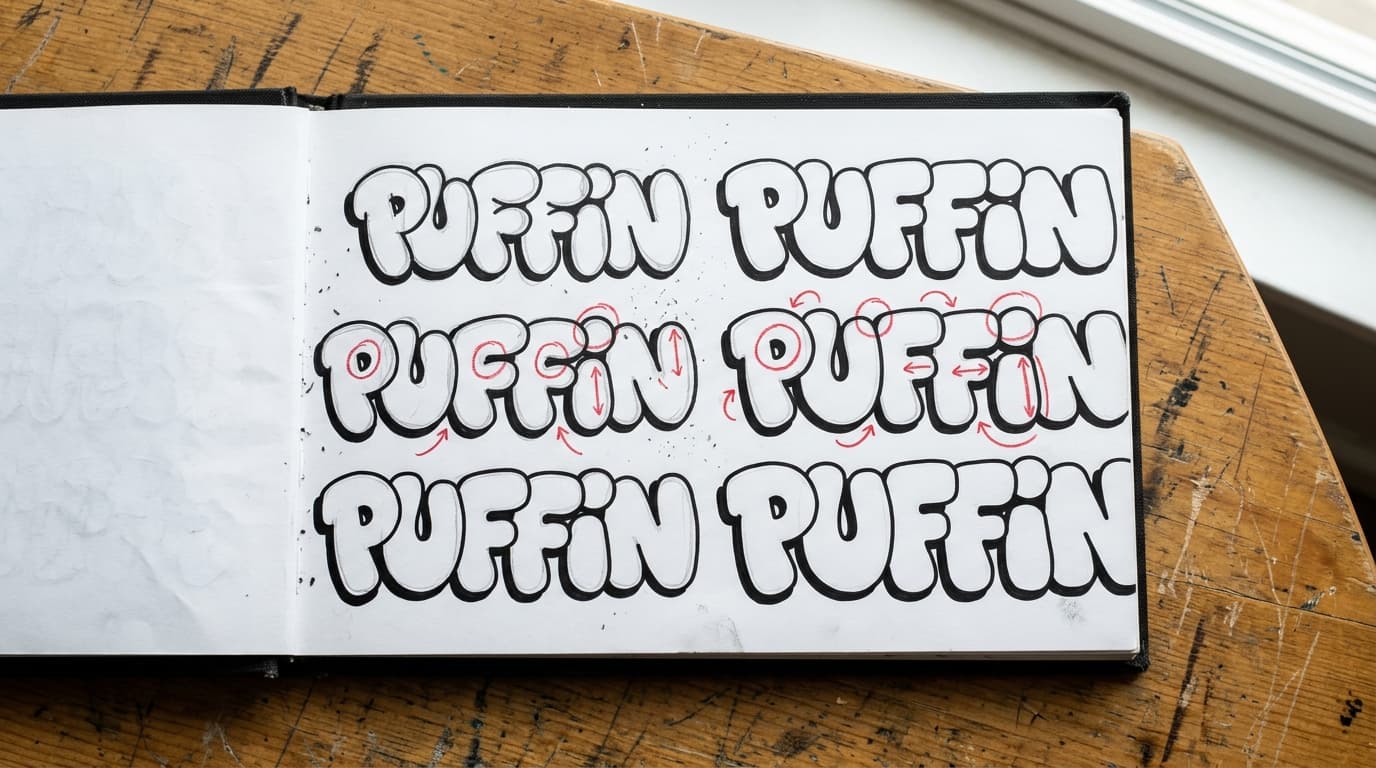
Worked fix sheet: the first pass pinches the middle, the marked pass shows where the air needs to return, and the clean redraw keeps the same word but fixes the rhythm.
Failure example: one loud move can throw the whole word off
The SQUASH example fails in a very normal way. Big opener, cramped middle, Q and A losing too much breathing room. Nothing here is some advanced disaster. It is just what happens when you keep outlining because the piece feels close, even though the center is already going bad.
Notice what does not need fixing first: color, texture, background. None of that is the problem. The repair is structural. Reopen the counters, calm the center, stop one letter from stealing all the attention.
If a piece only starts feeling strong once you add more outline, more drips, or more shadow, the base is still weak. That is usually the moment to strip it back, not feed it more.
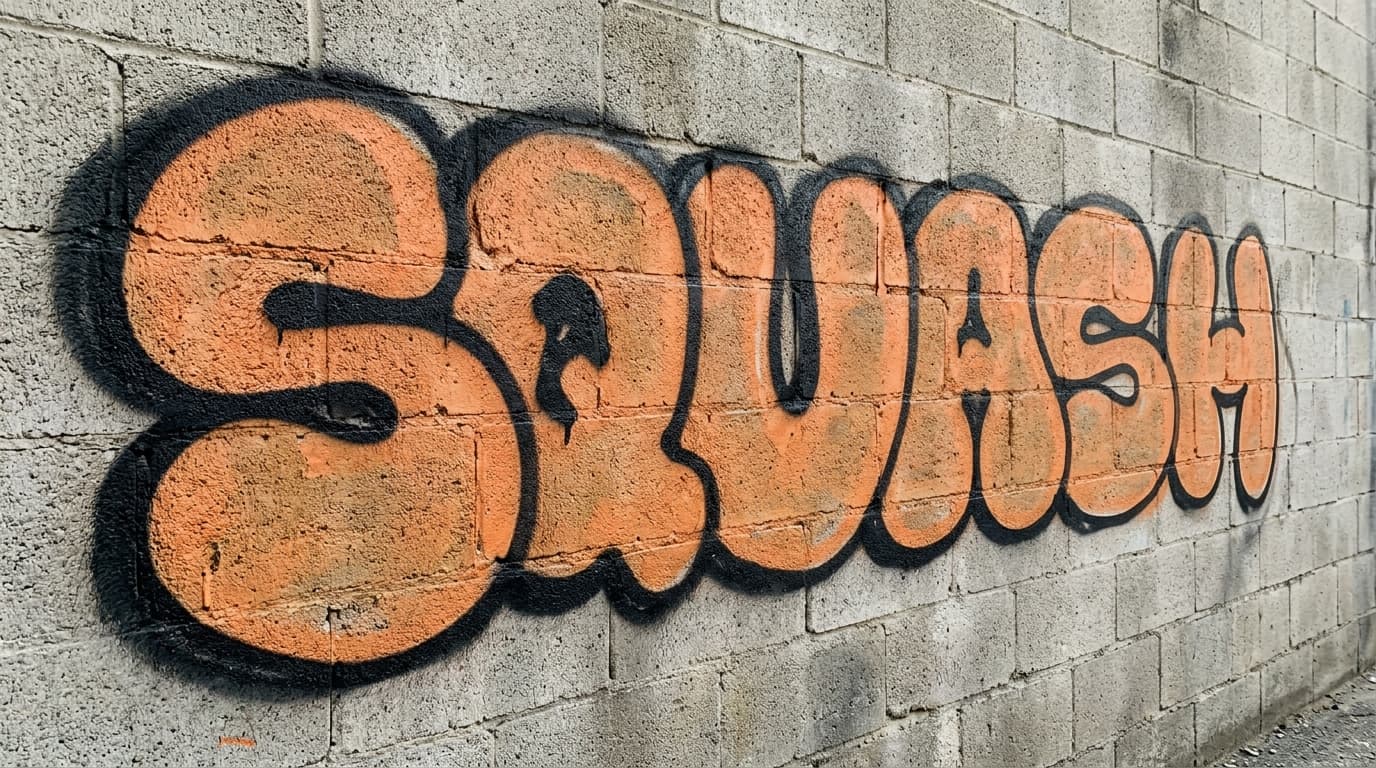
Failure reference: the wall feels real, but the word still chokes in the center because the spacing and openings were never settled.
A 15-minute repair loop that actually helps
Do not spend an hour trying to rescue one tired word. Fifteen honest minutes is better if each round has a job. Pick one short word. Pick one mistake. Make yourself compare versions instead of hovering over the same pass forever.
If the word improves only when you baby it with effects, it is not fixed yet. Keep the simpler version. A lot of people learn slower because they keep the louder redraw instead of the cleaner one.
- Make two quick shell sketches of the same word.
- Circle the letter pair that keeps fighting.
- Redraw one cleaner pass with more even bar weight.
- Add one detail only after the word reads from a distance.
- Save the cleaner version and run a new word tomorrow.
FAQ
Why do my bubble letters look crowded?
Should bubble letters touch each other?
What is the best kind of word for bubble-letter practice?
How many style effects should I add while fixing a weak word?
Related Reads and Next Actions
Next Step
Ready to Apply This in a Real Generation?
Take one stubborn word through the repair loop tonight. Save the clean pass, not the loud pass, then test the same fix on a new word tomorrow so the improvement actually sticks.